
Projects
In-house Virtual Oil and Gas Platform Walkthrough for Teaching and Learning
Comprehensive Summary
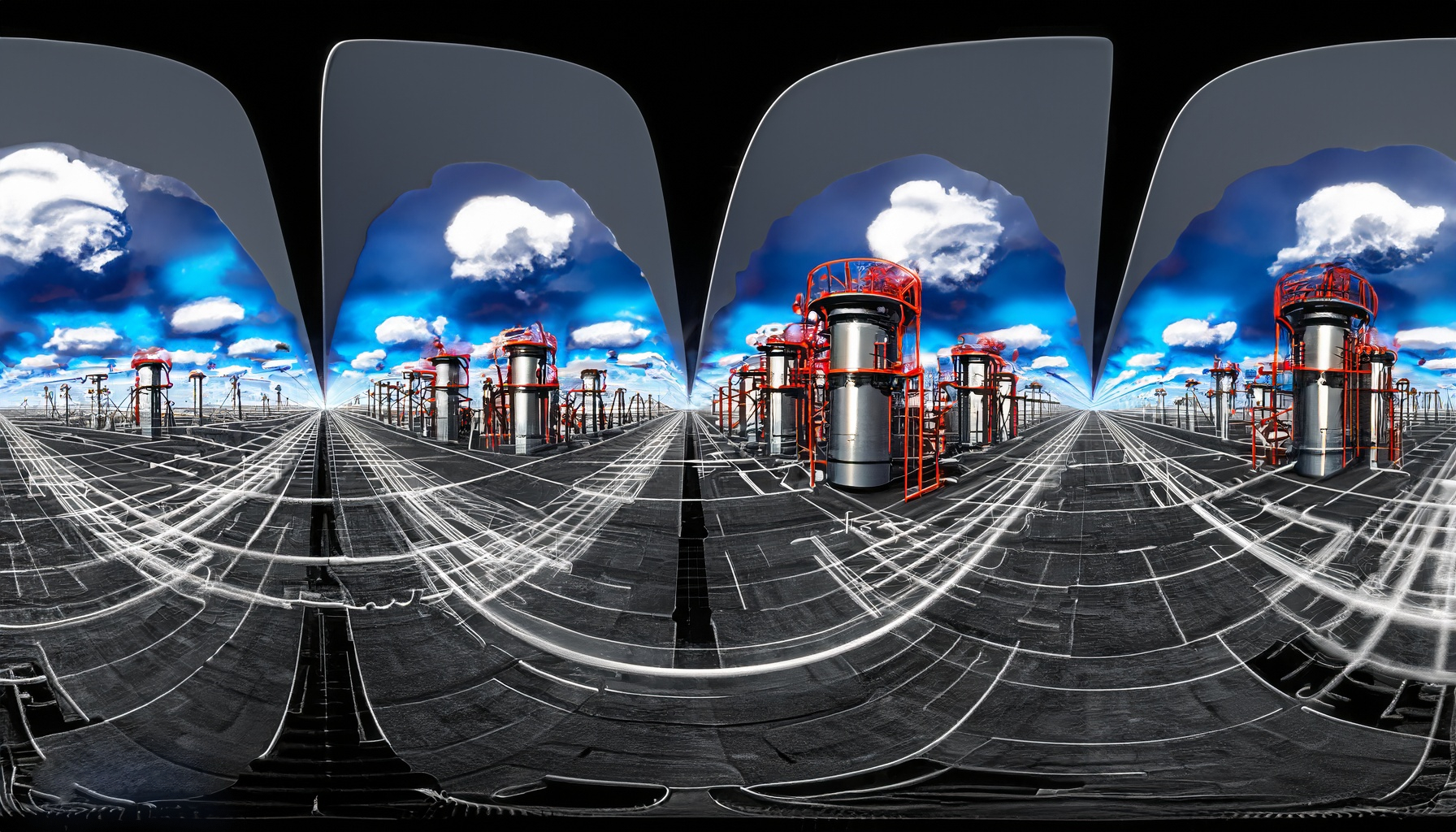
In addition to the efficacy of existing teaching and learning, there is a strong cost component which must not be overlooked. Repeatedly taking a group of students to an on-site location is an expensive proposition, and that, too, can be avoided. Virtual reality (VR) provides an interactive experience for oil and gas processes within a simulated environment. A geologist equipped with a VR headset can visualize the Earth’s subsurface and interpret seismic data using this technology. Similarly, an operator can get a virtual tour of a refinery and understand its layout through VR-powered training modules. This technology presents a superior alternative to images, charts, and schematics in the design and planning of different activities in the oil and gas sector. In recent decades, there are few technique to map the reservoir; passive i.e., gravity and magnetic, active i.e., seismic reflection. For seismic, direct hydrocarbon indicator (DHI) is used to detect the presence of hydrocarbon in the formation with the newest finding to map the reservoir is using electromagnetic geophysical survey. Apart from it, the VR technique to map the reservoir would greatly contribute to accuracy of reservoir simulation. It will provide a better reservoir area and thickness to increase the accuracy of the simulation thus, provide a better stock tank oil initially in place (STOIIP) and gas initially in place (GIIP) assumption for a new or existing
Project Justification
Virtual Reality (VR) technology is spearheading a transformative shift in the realm of oil and gas education. By harnessing the immersive power of VR, students and professionals in the industry can delve into realistic, three-dimensional environments that simulate complex operations, machinery, and hazardous scenarios without any real-world risk. This allows for hands-on learning experiences, improving comprehension, retention, and decision-making skills. Moreover, VR facilitates collaborative learning, enabling geographically dispersed teams to interact and learn together in a virtual space, fostering a more cohesive and globally connected workforce. As a result, the integration of VR technology in oil and gas education is significantly enhancing the efficiency, safety, and effectiveness of training programs, propelling the industry towards a more innovative and competent future.
Objectives
- To create virtual reality (VR) oil and gas platform walkthrough for teaching and learning.

Phases Of Work
Storyboard/Wireframe
Assets Creation
VR Programming & Animation
Evaluation
Evaluation Metrics
Completion of the VR prototype
Estimated Budget
Malaysian Ringgit

Project Timeline
Project Start
October 2020Project End
September 2021Get Started
Get In Touch!
It would be great to hear from you! Contact us using the button provided below if you have any inquiries, comments, or if you simply want to say hi. In our ongoing efforts to get better and serve you better, your input is very important to us.