
Projects
Gamification Design Model to Support Autism Children Interaction Skills
Comprehensive Summary
Autism Spectrum Disorders (ASD) are a group of behaviourally defined disorders with abnormalities or impaired development in two areas which firstly named as persistent deficits in social communication and social interaction and secondly is restricted, repetitive patterns of behaviour, interests, or activities. As example, ASD children often have difficulty with cooperative play with other peers and they prefer to continue with their own repetitive activities. In recent years, many studies have been conducted using different technologies in order to deal with ASD children. One of the technologies is called gamification and it can contribute to improving behaviours of ASD players such as positive influence on participation and engagement. However, poor designs of gamification lead to the challenge to fulfil the therapeutic objectives. Thus, the main objective of this research is to propose a new design model for gamification software aimed to improve interaction skills among ASD children. To achieve the mentioned objective, a qualitative research methodology will be adopted in this study through literature exploratory, experts’ feedback, prototype and interviews. The findings of this research are expects to provide a gamification design model that can be applied for gamification software in the future as an intervention tools among ASD children. The purpose of the developed gamification is to improve ASD interaction skills. Further, the findings also can be used as a reference and guideline for other purpose of gamification ASD intervention tools such as speech delay or class learning issues.

Project Justification
Recently, ASD is the most common issue occurred towards young children. One of the major behaviours problems in ASD is interaction skill. It is an impaired ability to both use and understand non-verbal communications and emotions. Current treatments for children with ASD are intensive and some parts of this treatment can potentially be executed using gamification. Researchers have associated ASD with gamification application and attempt to solve several behaviours problem among ASD children. Several advantages of gamification have contributed in improving behaviours of players such as positive influence on participation and engagement, motivate people to do certain activities which they usually do not particularly like to do and improve teamwork, social skills, leadership and collaboration. Hence, there is a need to study the interaction of gamification model’s design elements and the dynamics that merged during game plays.
Objectives
- To identify, understand, and assess the current gamification models that suit with ASD children needs.
- To propose a new comprehensive gamification design model to support ASD children interaction skills.
- To validate the proposed gamification design model to ensure that all requirements have been met and fulfilled.
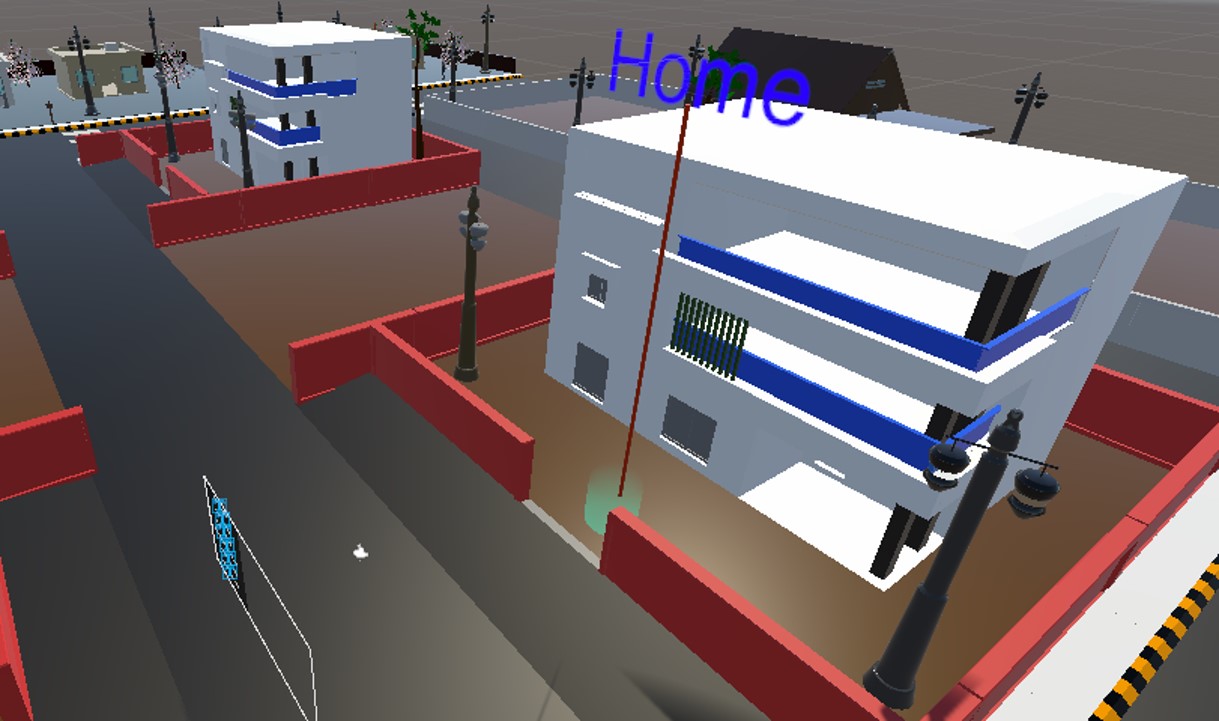
Phases Of Work
Gamification Design Framework for ASD children
Prototype
Publications
- Systematic Literature Review (SLR) paper
- Prototype paper
- Framework validation paper
Final Report
Evaluation Metrics
To gather valuable insights and feedback from stakeholders, students, and educators regarding the XR educational prototype, a comprehensive survey is designed and conducted. This survey aims to capture user opinions, suggestions, and observations to inform iterative improvements and refinements for the next stages of the project.
Estimated Budget
Malaysian Ringgit
Project Timeline
Systematic Literature review
October 2019Preliminary survey
December 2019Analysis of Gamification Modeling
February 2020Gamification Framework Modeling
April 2020Model Validation (Prototype)
July 2020Final Report
August 2021Get Started
Get In Touch!
It would be great to hear from you! Contact us using the button provided below if you have any inquiries, comments, or if you simply want to say hi. In our ongoing efforts to get better and serve you better, your input is very important to us.